Skip to content
Sections
Policy

Policy

Policy coverage from Germany, with in-house analysis.

Policy

Defense Leaders Call for European Sovereignty in Military AI

Saab CEO Micael Johansson warns that Europe risks strategic dependency if it relies on foreign AI for critical defense infrastructure. He advocates for a coordinated European approach to developing and controlling dual-use AI technologies to ensure operational autonomy.

Source: Read full story at Politico

In-house analysis

For Germany’s industrial base, this highlights the necessity of integrating sovereign AI into the defense supply chain. We must ensure that German engineering excellence is paired with domestic, secure AI models rather than off-the-shelf foreign solutions.

Policy

Leaked Documents Reveal Scale of US Homeland Security AI Surveillance Plans

Internal documents obtained via a data breach expose the US Department of Homeland Security's extensive roadmap for AI-driven surveillance. The plans include the deployment of facial recognition and predictive analytics to process vast datasets from public and private sources.

Source: Read full story at The Guardian

In-house analysis

This leak highlights the stark divergence between US security-centric AI applications and the EU's regulatory framework. For German tech leaders, it reinforces the strategic importance of developing 'Sovereign AI' solutions that prioritize data privacy and industrial integrity.

Policy

Leaked DHS Documents Reveal Aggressive AI Surveillance Roadmap

Internal data from the US Department of Homeland Security details extensive plans for AI-driven border monitoring and automated vetting. The documents highlight a strategic shift toward predictive policing and facial recognition technologies despite ongoing privacy concerns.

Source: Read full story at The Guardian

In-house analysis

This leak underscores the growing divide between US security-centric AI and the EU's regulatory framework. For German firms, it emphasizes that 'Privacy by Design' is not just a legal hurdle, but a critical competitive advantage in the global industrial AI market.

Policy

Macron Defends EU AI Act as Necessary Framework for Innovation and Safety

French President Emmanuel Macron has publicly backed the EU AI Act, dismissing claims that the regulation will stifle European competitiveness. Alongside his defense of the legislative framework, Macron announced a new initiative to combat 'digital abuse' and enhance child safety online through stricter platform oversight.

Source: Read full story at The Guardian

In-house analysis

Macron’s alignment with the EU's regulatory path reinforces a predictable legal environment for the German Mittelstand, though the challenge remains ensuring these rules don't hamper industrial AI deployment compared to US or Chinese rivals.

Policy

Leaked DHS Documents Reveal Scope of US AI Surveillance Roadmap

Internal documents from the US Department of Homeland Security, exposed via a data breach, detail plans for widespread AI-driven surveillance. The roadmap includes the deployment of facial recognition and predictive analytics across federal agencies to monitor public infrastructure and borders.

Source: Read full story at The Guardian

In-house analysis

This leak underscores the widening gap between US security-centric AI applications and the EU's privacy-first regulatory framework. For German industrial AI providers, navigating these divergent standards is becoming a critical strategic challenge for international market entry.

Policy

Macron Backs EU AI Act While Prioritizing Digital Safety Standards

French President Emmanuel Macron has publicly defended the European Union's AI Act, framing it as a vital tool for balancing technological progress with societal protection. The French leader also announced a specific crackdown on digital abuse targeting children, signaling a broader regulatory focus on platform accountability.

Source: Read full story at The Guardian

In-house analysis

Macron’s alignment with the EU AI Act reinforces a unified European regulatory front, providing the legal stability German industrial firms need, though the focus on safety mandates will require rigorous technical compliance from B2B software providers.

Policy

Macron Reaffirms Support for EU AI Act Amid Innovation and Safety Concerns

French President Emmanuel Macron has defended the EU AI Act, framing it as a necessary framework to balance technological advancement with societal protection. He specifically emphasized a new crackdown on child 'digital abuse' and the importance of maintaining European sovereignty in the global AI race.

Source: Read full story at The Guardian

In-house analysis

Macron’s shift from skeptic to defender of the AI Act provides the regulatory certainty the German Mittelstand needs to invest, though the focus on social safeguards suggests compliance will remain a complex, multi-layered hurdle for industrial developers.

Policy

Nokia Urges Unified European Digital Market to Scale Industrial AI and Connectivity

Nokia CEO Pekka Lundmark calls for immediate action to harmonize European digital policy and eliminate market fragmentation. The proposal emphasizes creating a 'Single Market for Tech' to foster innovation in critical areas like AI, 5G, and cloud infrastructure.

Source: Read full story at Nokia

In-house analysis

For the German Mittelstand, a unified European framework is the only way to achieve the scale necessary to compete with US and Chinese hyperscalers in industrial AI.

Policy

Macron Reaffirms Support for EU AI Act Amid Push for Digital Safety

French President Emmanuel Macron has formally defended the EU AI Act, emphasizing the necessity of a unified regulatory framework to ensure safety and ethical standards. Alongside policy defense, Macron announced a specific crackdown on 'digital abuse' targeting minors to strengthen online protection measures.

Source: Read full story at The Guardian

In-house analysis

Macron's shift from skeptic to defender of the AI Act provides the regulatory certainty German industrial firms need for long-term investment. This Franco-German alignment is crucial for establishing a predictable 'CE' mark for AI that doesn't stifle the Mittelstand's innovation capacity.

Policy

Nokia Urges Unified European Strategy to Scale Industrial AI and Connectivity

Nokia CEO Pekka Lundmark has called for a unified European digital market to counter global competition from the US and China. The proposal highlights the necessity of harmonizing regulations and prioritizing investment in high-performance connectivity and AI infrastructure.

Source: Read full story at Nokia

In-house analysis

For the German Mittelstand, overcoming regulatory fragmentation is essential to scaling industrial AI across borders. A unified digital market would provide the necessary scale for German firms to lead in the next wave of B2B innovation.

Policy

Europe’s Industrial AI Strategy: Balancing Regulation with Sovereignty

The European Union is intensifying its efforts to secure AI leadership through the implementation of the AI Act and significant investments in high-performance computing infrastructure. The strategy focuses on fostering a 'sovereign AI' ecosystem that prioritizes ethical standards while attempting to close the investment gap with the US and China.

Source: Read full story at Meer

In-house analysis

For the German Mittelstand, this shift toward sovereign infrastructure is critical to maintaining data sovereignty in industrial applications, though the regulatory burden of the AI Act remains a primary concern for scaling startups.

Policy

Nokia Urges Unified European Tech Strategy to Combat Global Fragmentation

Nokia leadership has issued a call to action for EU policymakers to harmonize digital regulations and accelerate cross-border infrastructure investment. The proposal advocates for a 'Single Digital Market' to streamline the deployment of AI and next-generation connectivity across the continent.

Source: Read full story at Nokia

In-house analysis

For the German Mittelstand, regulatory fragmentation remains the primary barrier to scaling industrial AI. Nokia’s push for infrastructure parity is essential if Germany is to maintain its manufacturing lead through high-performance edge computing and 5G-enabled automation.

Policy

Sovereign AI: A Strategic Mandate for European Defense Autonomy

Saab CEO Micael Johansson warns that Europe must develop and control its own AI models for military applications to avoid critical dependencies on foreign technology. The call for strategic autonomy comes as AI becomes increasingly central to modern electronic warfare and defense systems.

Source: Read full story at Politico

In-house analysis

For the German industrial base, this underscores that AI leadership is now a matter of national security; without domestic capabilities, our defense-tech Mittelstand risks becoming a mere hardware provider for foreign software.

Policy

EU Strategy: Balancing Regulation with Industrial AI Sovereignty

The European Union is implementing a multi-pronged strategy to secure AI leadership, centered on the AI Act and the 'AI Innovation Package.' This framework prioritizes the development of 'AI Factories' and provides startups with access to dedicated supercomputing resources to foster a sovereign ecosystem.

Source: Read full story at Meer

In-house analysis

For the German Mittelstand, this shift from pure regulation to infrastructure support is critical; success depends on whether 'AI Factories' can translate high-level policy into accessible compute for industrial applications.

Policy

CNIL Releases English Guidance for GDPR-Compliant AI Development

The French Data Protection Authority (CNIL) has finalized its English-language guidance sheets for the development of AI systems. These documents provide technical and legal frameworks for training datasets, focusing on data minimization and the selection of appropriate legal bases under the GDPR.

Source: Read full story at DataGuidance

In-house analysis

For the German Mittelstand, this provides a much-needed cross-border benchmark for compliance while we wait for harmonized EU AI Act implementation. It bridges the gap between abstract regulation and technical implementation for industrial AI developers.

Policy

CNIL Sets Regulatory Guardrails for Deepfakes and Synthetic Content

The French data protection authority, CNIL, has released comprehensive guidelines addressing the legal risks of AI-generated deepfakes. The guidance clarifies obligations under the GDPR, emphasizing transparency requirements and the prevention of illicit content dissemination.

Source: Read full story at DataGuidance

In-house analysis

As Germany navigates the AI Act, CNIL’s proactive stance provides a blueprint for the BfDI. For the Mittelstand, this signals a shift toward stricter compliance requirements for synthetic media in marketing and industrial simulation.

Policy

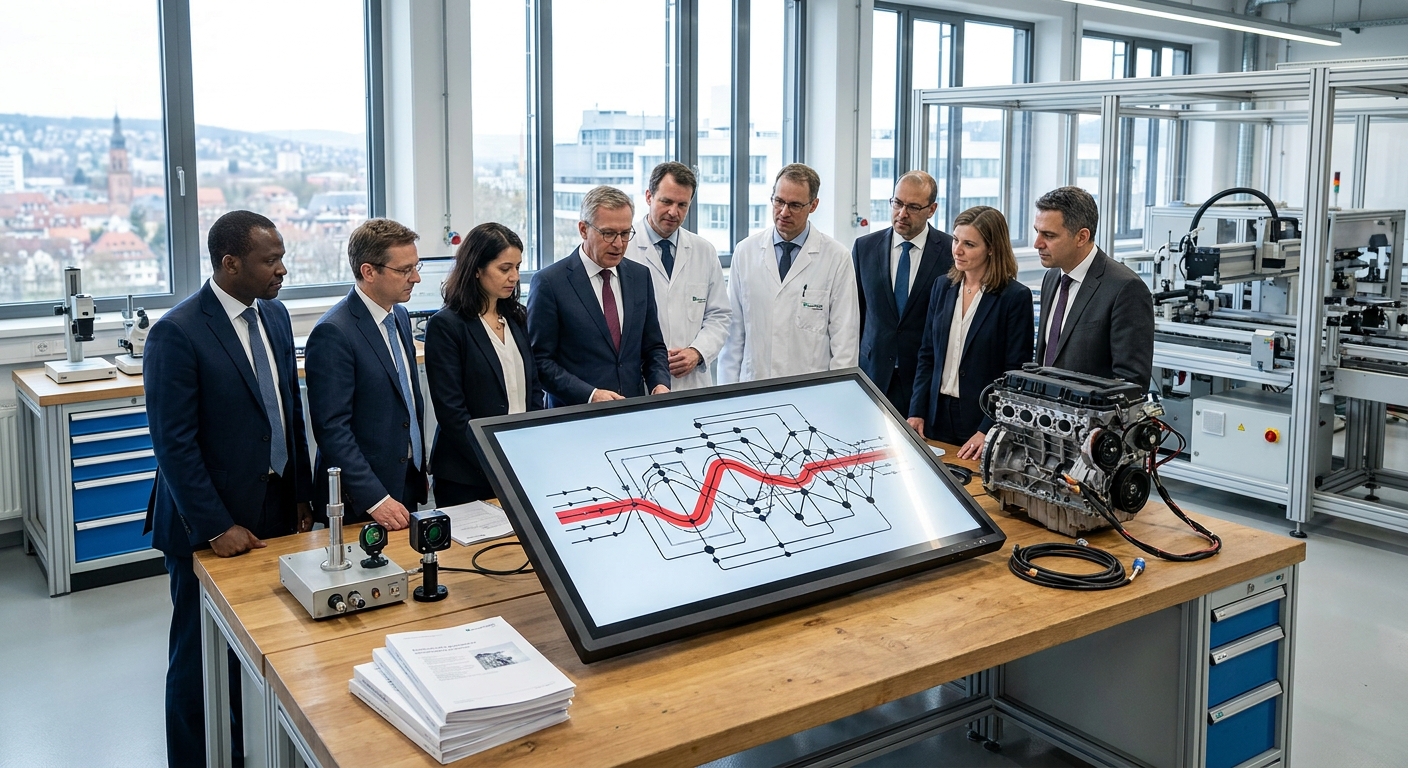
Berlin and Paris Align on Industrial AI Strategy with New Joint Report

Industry leaders from France and Germany have submitted a comprehensive report to their respective governments outlining a shared vision for European AI sovereignty. The document emphasizes collaborative research, cross-border data spaces, and the scaling of industrial AI applications to compete globally.

Source: Read full story at Inria

In-house analysis

For the German Mittelstand, this alignment is critical to ensuring that European AI regulation doesn't stifle industrial innovation while providing the infrastructure needed for B2B applications.

Policy

Berlin Secures Concessions for Foundation Models in EU AI Act Negotiations

Germany, France, and Italy have proposed a 'mandatory self-regulation' framework for foundation models to replace stricter rules in the upcoming EU AI Act. The joint position paper emphasizes using codes of conduct to ensure transparency while avoiding a regulatory burden that could stifle European AI startups.

Source: Read full story at Politico

In-house analysis

This is a critical victory for the German AI ecosystem, particularly for firms like Aleph Alpha that require room to scale against US incumbents. It signals a move toward a 'pro-innovation' stance that balances safety with the technical realities of industrial AI deployment.

Policy

Transatlantic Defense: US and Germany Deepen Military AI Integration

The United States and Germany have formalized a partnership to accelerate the integration of artificial intelligence into their defense sectors. The initiative focuses on enhancing interoperability and establishing common standards for AI-driven military applications and autonomous systems.

Source: Read full story at ForkLog

In-house analysis

For the German industrial base, this mandate for interoperability necessitates a shift toward modular, software-defined defense architectures that can scale across NATO operations. It opens critical opportunities for specialized German AI firms to integrate into the broader transatlantic security supply chain.

Policy

Leaked DHS Documents Reveal Extensive AI Surveillance Ambitions

Internal documents from the US Department of Homeland Security detail plans for AI-driven biometric identification and predictive analytics in law enforcement. The leak exposes a significant push to integrate private-sector AI capabilities into federal security infrastructure.

Source: Read full story at The Guardian

In-house analysis

This highlights the stark divergence between US security-led AI deployment and the EU AI Act's focus on fundamental rights. German firms must account for these conflicting regulatory landscapes when developing dual-use technologies or managing transatlantic data partnerships.