German researchers are deploying AI across more than 1,000 camera traps, sound recorders, and climate sensors in national parks. The system identifies animal species, tracks populations, and analyzes forest growth to measure biodiversity and climate impact.
Raw sensor data is not conservation insight. The signal to watch: whether park regulators accept AI output as the record of truth, replacing fieldwork.
Germany's military is prioritizing AI integration to speed battlefield decision-making, drawing on four years of Ukrainian war data. Lieutenant General Freuding says no vendor is chosen yet, but alignment with NATO standards is required.
The data is Ukrainian, but the procurement risk is German. Sovereign capability versus rented cloud inference is the decision that follows this announcement.
Canadian AI company Cohere and Germany's Aleph Alpha are merging to form a joint challenger to dominant US AI labs. The deal positions European and Canadian enterprise AI against Silicon Valley incumbents.
Two sovereign AI bets merge into one. German enterprise buyers lose an independent local option but gain a larger operator. Capability was never the constraint. Distribution is.
Dragon LLM CEO Olivier Debeugny argues Europe needs a frugal AI architecture built for industrial efficiency. He envisions a pan-European generative AI consortium modeled on Airbus.
A French AI startup is challenging OpenAI for European market position. The Economist profiles the company as a credible sovereign alternative to US-based frontier labs.
Capability is the entry ticket. Distribution is the prize. German Mittelstand buyers will not switch on ambition alone: they switch when compliance and support are local.
Germany's AI manufacturing market is projected to reach $10.50 billion by 2030, up from $2.14 billion in 2026. The 35.8% CAGR is driven by Industry 4.0 adoption, predictive maintenance, and smart factory integration.
AI is reshaping German election campaigns, but no clear regulatory framework governs its use. Experts warn the unregulated environment poses direct risks to democratic trust in Germany's super election year.
No rules means the bold operator wins and the cautious one concedes ground. The risk is not capability, it is undisclosed use eroding the one thing elections require: trusted signal.
EU ambassadors backed Germany's push to exempt industrial machinery from the EU AI Act. The deal also delays high-risk AI restrictions by more than a year.
Capability rules met industrial lobbying, and industrial lobbying won. The line between regulated AI product and exempt industrial machine just moved, and every Mittelstand automation buyer should know where it landed.
France's CNIL has released an English-language version of its AI how-to sheets. The guides give operators practical privacy compliance steps for AI deployments.
Regulators publishing in English is a distribution move, not a courtesy. The compliance burden shifts from interpretation to execution, and German operators with French exposure lose their ambiguity buffer.
France's CNIL has issued guidance targeting deepfakes and illegal AI-generated content. The regulator's move signals active enforcement intent in the generative AI space.
Regulators are moving from policy paper to operational rule. German operators using generative AI for content production should treat this as a preview, not a French-only problem.
Dragon LLM, a French startup, claims to have developed Europe's first original generative AI architecture. The design is described as frugal and transformer-based, targeting industrial deployment.
Europe has borrowed AI architecture for years. The question now is whether a French lab can turn a sovereign design into a distribution advantage that German industrial buyers will actually pay for.
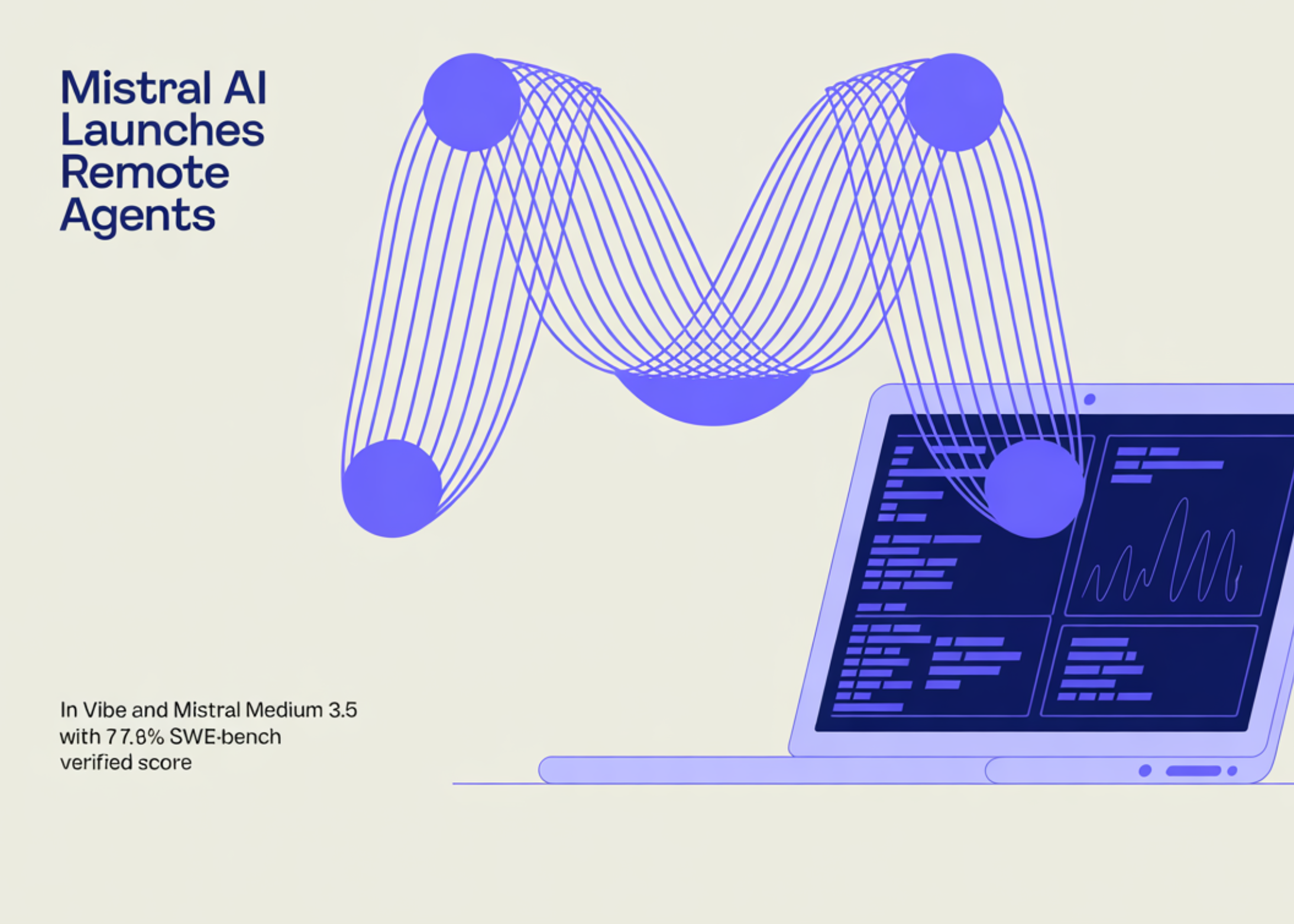
Mistral AI has launched remote agents in Vibe, its CLI-based coding platform, ending the requirement that sessions run locally. The new Mistral Medium 3.5, a 128B dense model, is now the default across both Vibe and Le Chat.
The shift is from local babysitting to delegated cloud execution. German engineering teams with thin developer benches pay for outcomes, not sessions. That is the market Mistral is now entering.
Researchers found that adding a single sentence to an AI prompt significantly increases creative output quality. The finding, reported by VentureBeat, requires no model changes, only a prompt edit.
Twenty data protection authorities signed a joint statement on trustworthy AI data governance at the Global Privacy Assembly in Seoul, September 2025. Signatories include Germany, France, the UK, Ireland, and fifteen others across four continents.
Regulators aligned on principle today become auditors with shared checklists tomorrow. German operators building on cross-border data pipelines should treat this statement as early compliance infrastructure, not a policy gesture.
The Bundesrat decides on July 10 whether to let Germany's AI Act implementation law (KI-MIG) pass or send it to the mediation committee. The chamber's digitalization committee recommends mediation, objecting that AI systems run by state and municipal bodies are excluded from Bundesnetzagentur oversight.
Germany is about to demonstrate whether federalism can produce a single AI regulator on deadline. The substance is settled; the risk is a mediation loop that leaves companies facing EU obligations in August with no national authority behind them.
Flexport is suing startup Freightmate AI, alleging former employees took shipment documents before launching a rival. The case centers on AI tools that classify, scrape, and cross-check freight paperwork across dozens of documents per shipment.
The dispute reframes the competitive moat in forwarding: not the AI tool itself, but the document datasets behind it. German Mittelstand forwarders face the same question, who controls the data their operators train on.
Google Cloud VP Darren Mowry says early infrastructure choices made on free credits carry unforeseen costs once startups scale. Tighter funding and rising cloud bills are forcing founders to show real traction sooner.
Free credits are the sample; the invoice is the product. Founders who treat infrastructure as a setup cost rather than an ongoing obligation pay twice.
Mistral AI founder Arthur Mensch has warned companies against building on proprietary AI models, arguing that providers increasingly store customer data and gain insight into business processes. He advises open systems, custom access rules, and independent AI training capability. THE DECODER reported the LinkedIn statements on July 5.
Mensch is talking his book, but the book has a real chapter for Germany: hidden champions run on process secrets, and every prompt into a closed model is a small disclosure. The fix is contractual and architectural, not emotional.
SAP has confirmed a Bloomberg report that it is curbing new hires, external spending, and internal travel to finance its AI expansion. New hiring will focus on selected AI-related roles while customer-facing work and critical AI initiatives stay fully funded.
A company does not cut travel to fund a hobby. SAP is treating AI as the survival line of its business model; its customers should read their own roadmap dependencies accordingly.
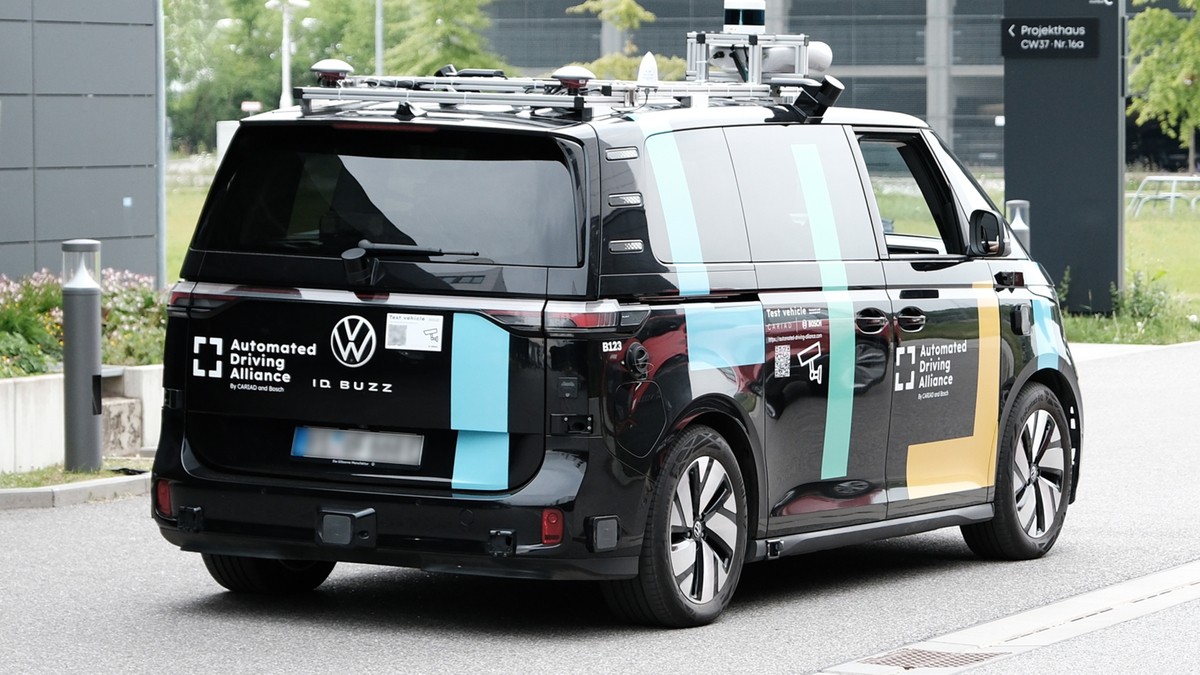
Volkswagen and Bosch have confirmed the end of their Automated Driving Alliance, the joint automated-driving program run through VW's software unit Cariad since 2022. Roughly 1.5 billion euros and over 1,000 experts went into the effort; both sides will now use the jointly developed AI software stack independently.
1.5 billion euros bought VW the knowledge that vertical integration in vehicle AI is beyond it. The strategic question is not the write-off but whose software stack now sits at the heart of German cars.